FieldValue
Package@cometchat/chat-uikit-angular
FrameworkAngular
ComponentsCometChatConversationsComponent, CometChatMessageHeaderComponent, CometChatMessageListComponent, CometChatMessageComposerComponent
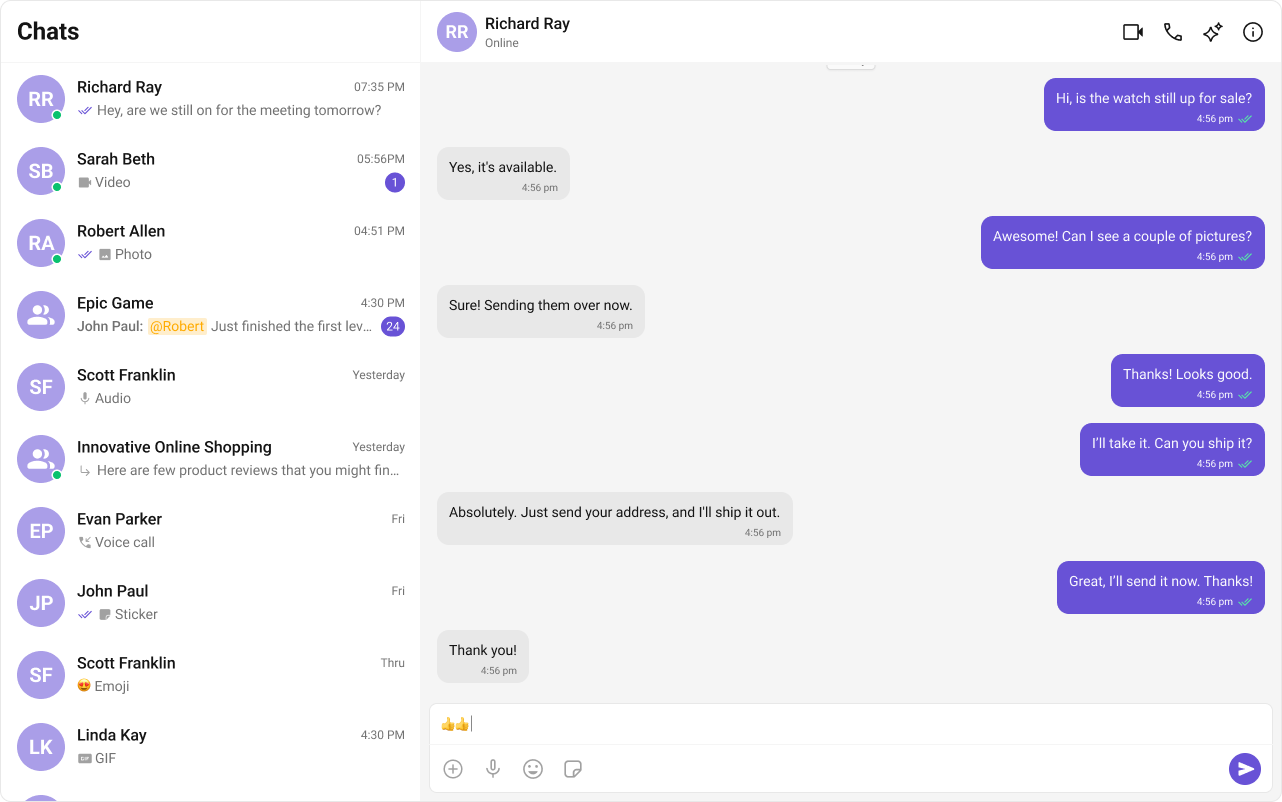
LayoutTwo-panel — conversation list (left) + message view (right)
PrerequisiteComplete Angular Integration Steps 1–5 first
PatternWhatsApp Web, Slack, Microsoft Teams
This guide builds a two-panel chat layout — conversation list on the left, messages on the right. Users tap a conversation to open it. This assumes you’ve already completed Angular Integration (project created, UI Kit installed, init + login working, CSS imported).

What You’re Building

Three sections working together:
  1. Sidebar (conversation list) — shows all active conversations (users and groups)
  2. Message view — displays chat messages for the selected conversation in real time
  3. Message composer — text input with support for media, emojis, and reactions

Step 1 — Update AppComponent

Wire the conversation list and message components together in your root component. The UIKit’s ChatStateService handles all the wiring — when a user clicks a conversation, cometchat-conversations updates the service, and the message components automatically react to the change.
src/app/app.component.ts
import { Component, inject, OnInit } from "@angular/core";
import {
  CometChatUIKit,
  CometChatConversationsComponent,
  CometChatMessageHeaderComponent,
  CometChatMessageListComponent,
  CometChatMessageComposerComponent,
  ChatStateService,
} from "@cometchat/chat-uikit-angular";
import { CometChat } from "@cometchat/chat-sdk-javascript";

@Component({
  selector: "app-root",
  standalone: true,
  imports: [
    CometChatConversationsComponent,
    CometChatMessageHeaderComponent,
    CometChatMessageListComponent,
    CometChatMessageComposerComponent,
  ],
  template: `
    @if (isLoggedIn) {
      <div class="chat-layout">
        <div class="sidebar">
          <cometchat-conversations></cometchat-conversations>
        </div>
        @if (chatStateService.activeUser() || chatStateService.activeGroup()) {
          <div class="chat-window">
            <cometchat-message-header></cometchat-message-header>
            <cometchat-message-list></cometchat-message-list>
            <cometchat-message-composer></cometchat-message-composer>
          </div>
        } @else {
          <div class="empty-conversation">
            Select a conversation to start chatting
          </div>
        }
      </div>
    } @else {
      <p>Loading...</p>
    }
  `,
  styles: `
    :host {
      display: flex;
      height: 100vh;
      width: 100vw;
    }
    .chat-layout {
      display: flex;
      width: 100%;
      height: 100%;
    }
    .sidebar {
      width: 360px;
      border-right: 1px solid #e0e0e0;
    }
    .chat-window {
      flex: 1;
      display: flex;
      flex-direction: column;
    }
    .empty-conversation {
      height: 100vh;
      width: 100%;
      display: flex;
      justify-content: center;
      align-items: center;
      background: var(--cometchat-background-color-03, #F5F5F5);
      color: var(--cometchat-text-color-secondary, #727272);
      font: var(--cometchat-font-body-regular, 400 14px Roboto);
    }
  `,
})
export class AppComponent implements OnInit {
  chatStateService = inject(ChatStateService);
  isLoggedIn = false;

  ngOnInit(): void {
    CometChatUIKit.getLoggedinUser().then((user: CometChat.User | null) => {
      if (!user) {
        CometChatUIKit.login("cometchat-uid-1")
          .then(() => (this.isLoggedIn = true))
          .catch(console.log);
      } else {
        this.isLoggedIn = true;
      }
    });
  }
}
How it works:
  • cometchat-conversations calls ChatStateService.setActiveConversation() automatically when a conversation is clicked.
  • setActiveConversation() extracts the User or Group and sets it as the active entity, enforcing mutual exclusivity (setting a user clears the group, and vice versa).
  • cometchat-message-header, cometchat-message-list, and cometchat-message-composer auto-subscribe to ChatStateService — no [user] or [group] bindings needed.
  • The @if block reads chatStateService.activeUser() and chatStateService.activeGroup() signals to show the chat window or the empty state.
This is the recommended approach for most applications. For advanced use cases like multi-panel layouts where each panel needs independent state, you can pass [user] or [group] via @Input() bindings to override the service. See the State Management guide for details.

Step 2 — Run the Project

ng serve
You should see the conversation list on the left. Tap any conversation to load messages on the right.

Next Steps

Theming

Customize colors, fonts, and styles to match your brand

Components Overview

Browse all prebuilt UI components

Angular Integration

Back to the main setup guide

Core Features

Chat features included out of the box