

AI Integration Quick Reference
AI Integration Quick Reference
Integrate with AI Coding Agents
Skip the manual steps — use CometChat Skills to integrate via your AI coding agent. Your agent has a short conversation with you to understand your project and chat requirements, then writes production-grade integration code tailored to the files you already have.--ide <name> to target a specific IDE (e.g. --ide cursor), or --ide all for all supported IDEs.
Then in your IDE:
/cometchat to access the iteration menu: theme presets, 40+ features, component customization, push notifications, production auth, user management, and diagnostics.
Works with Claude Code, Cursor, Codex, VS Code Copilot, Windsurf, Cline, Kiro, and 30+ more agents.
Prerequisites
You need three things from the CometChat Dashboard:
You also need:
- Node.js (v16+) and npm/yarn installed
- React Native development environment set up (React Native CLI Quickstart)
- Xcode (for iOS) and Android Studio (for Android)
Step 1 — Create a React Native Project
Step 2 — Install the UI Kit
Android: Add Local Maven Repository for Async Storage
android/build.gradle
Add Permissions for Android
Openandroid/app/src/main/AndroidManifest.xml and add:
iOS: Add Modular Headers to the Podfile
Add these two lines inside your target inios/Podfile:
ios/Podfile
Install iOS Pods
If
pod install fails with Unicode Normalization not appropriate for ASCII-8BIT, CocoaPods needs a UTF-8 locale. Re-run it as LANG=en_US.UTF-8 pod install.Configure Gesture Handler
Add this import at the very top of your entry file (before any other imports):index.js
Optional: Install Calling SDK
To enable voice/video calling:ios/MyApp/Info.plist:
Step 3 — Initialize CometChat
- TypeScript
- JavaScript
Step 4 — Login
After init resolves, log the user in. For development, use one of the pre-created test UIDs:cometchat-uid-1 · cometchat-uid-2 · cometchat-uid-3 · cometchat-uid-4 · cometchat-uid-5
- TypeScript
- JavaScript
For production, use
loginWithAuthToken() instead of Auth Key. Generate tokens server-side via the REST API.Step 5 — Choose a Chat Experience
Integrate a conversation view that suits your app’s UX. Each option below includes a step-by-step guide.Conversation List + Message View
List of conversations on one screen, tap to open messages. Standard mobile chat pattern.- Conversation list with real-time updates
- Tap-to-view — tapping a conversation opens the message view
- Switch between one-to-one and group conversations
- Back navigation to return to the list
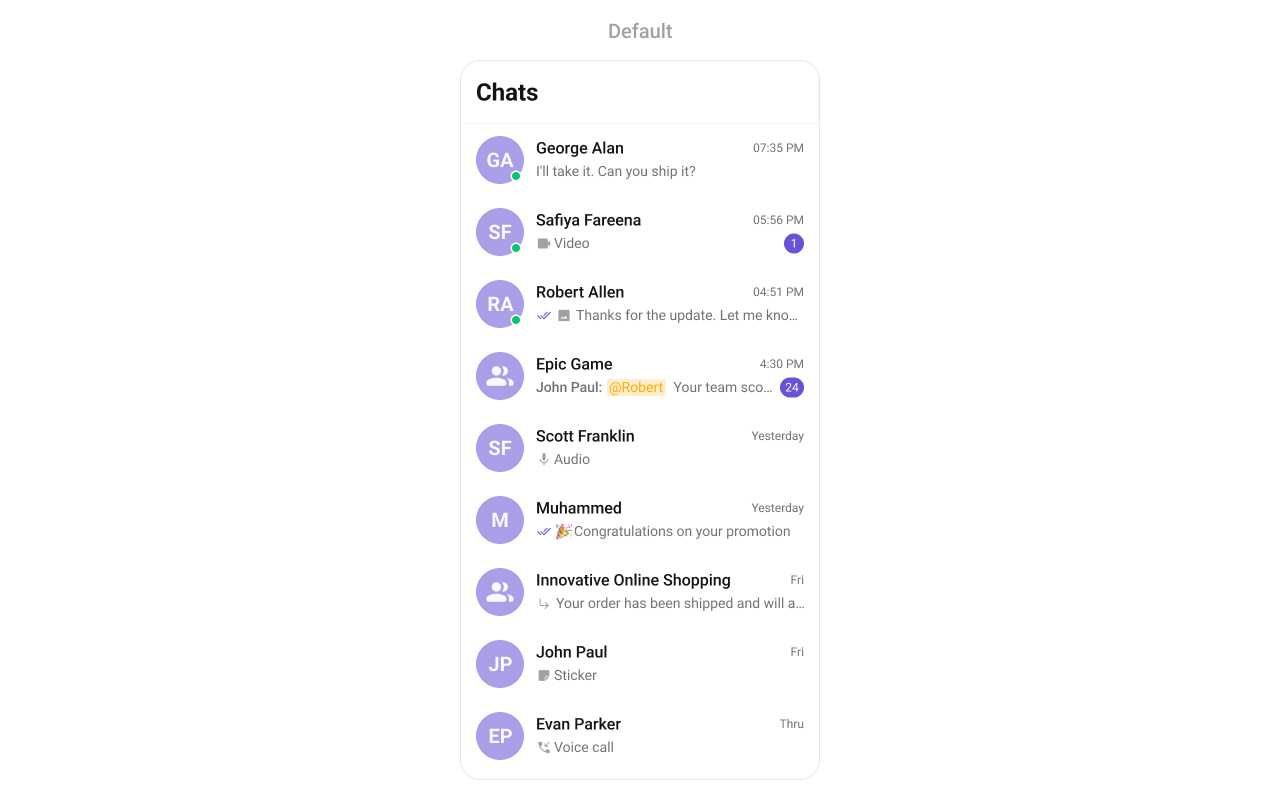
Build Conversation List + Message View
Step-by-step guide to build this layout
One-to-One / Group Chat
Single chat window — no conversation list. Good for support chat, embedded widgets, or focused messaging.- Dedicated chat window for one-on-one or group messaging
- No conversation list — users go directly into the chat
- Full-screen experience
- Ideal for support chat or community messaging
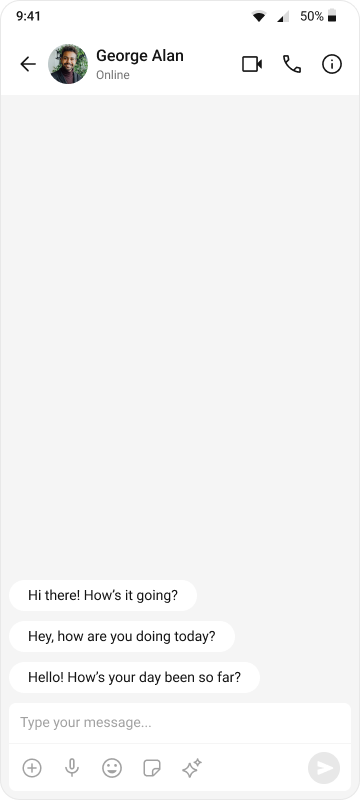
Build One-to-One / Group Chat
Step-by-step guide to build this layout
Tab-Based Chat
Tabbed navigation — Chats, Users, Groups, Calls in separate tabs. Good for full-featured apps.- Tab navigation between Chats, Users, Groups, and Calls
- Full-screen messaging within each tab
- Uses React Navigation bottom tabs
- Scales well for adding future features
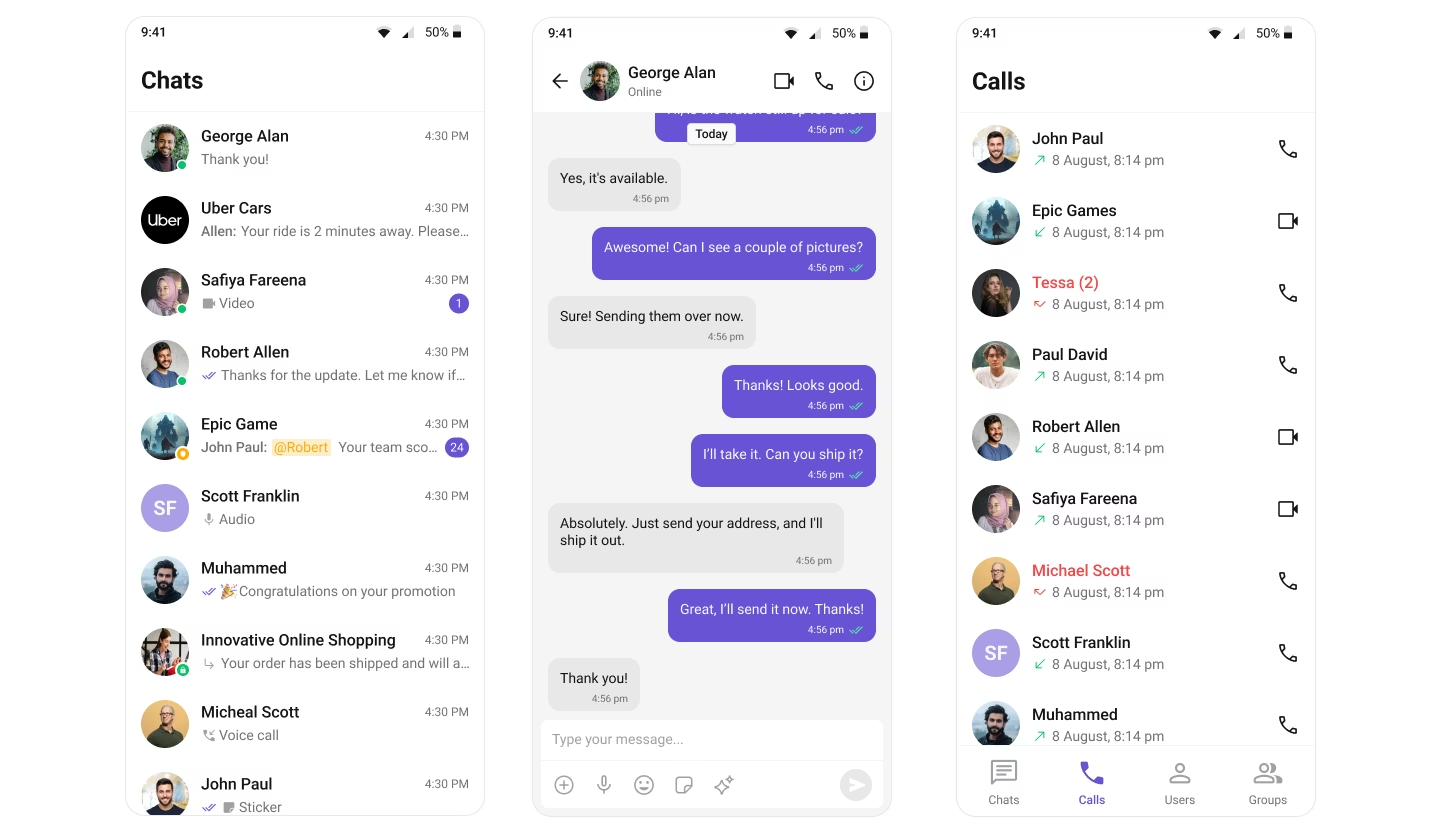
Build Tab-Based Chat
Step-by-step guide to build this layout
Build Your Own Chat Experience
Need full control over the UI? Use individual components, customize themes, and wire up your own layouts.- Sample App — Working reference app to compare against
- Components — All prebuilt UI elements with props and customization options
- Core Features — Messaging, real-time updates, and other capabilities
- Theming — Colors, fonts, dark mode, and custom styling
Next Steps
Components Overview
Browse all prebuilt UI components
Theming
Customize colors, fonts, and styles
Core Features
Chat features included out of the box
Troubleshooting
Common issues and fixes